In short
Openers usually fail at the sensors, the drive gear or the logic board. In Pleasantville, a technician tests each one, fixes what can be fixed and explains the options plainly if a replacement is the better choice.
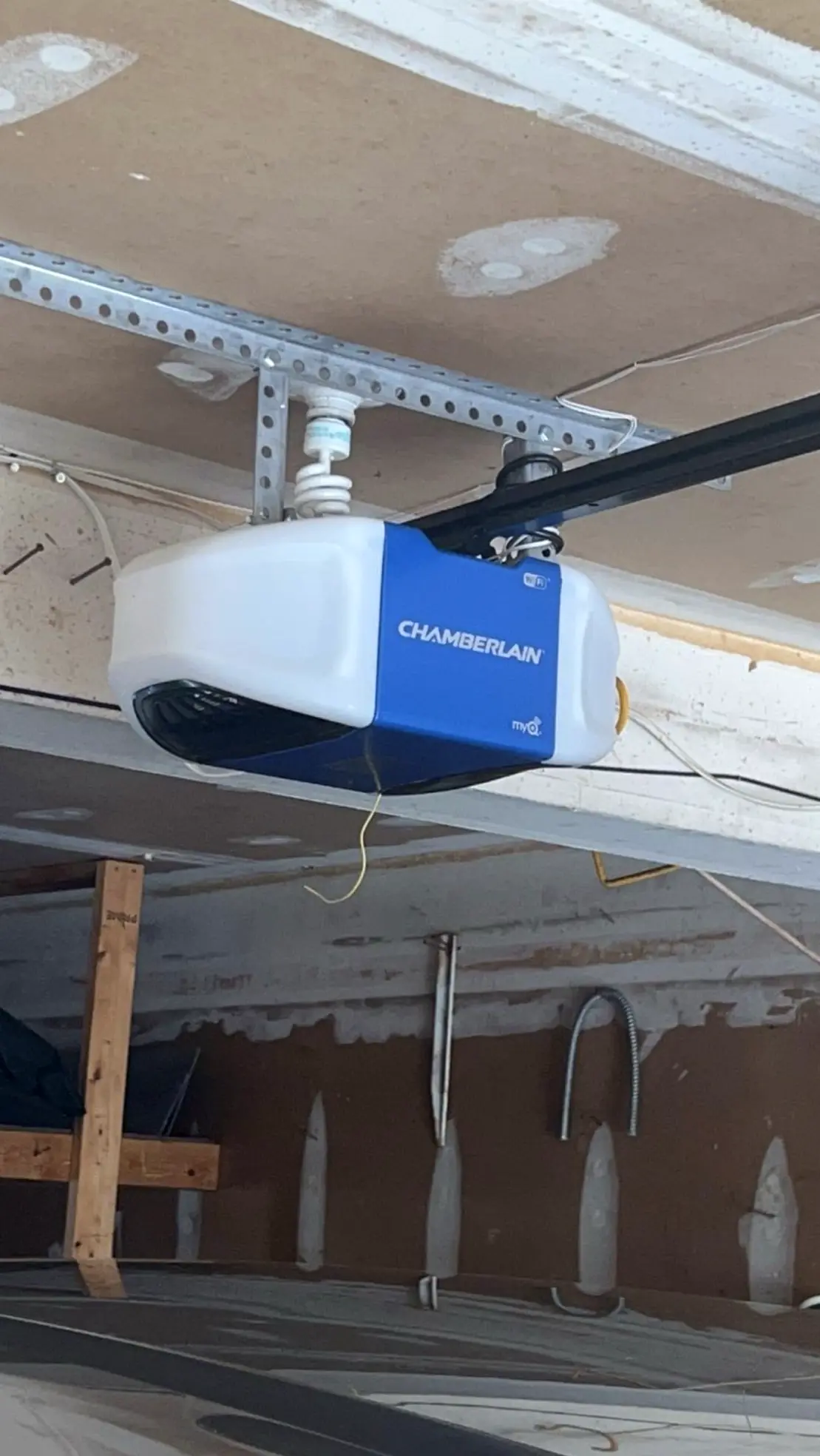
Openers in Pleasantville homes
In the village's older homes, garages are often too low for a ceiling rail; wall-mount openers solve that. Walking commuters heading for the train like keypads that work without a remote.
For rental properties near Pace, phone-controlled openers let owners check that doors are closed. Battery backup covers storm outages.
What the symptoms point to
If the door starts to close and reverses, the photo-eye sensors at the bottom of the tracks are the usual suspect. An opener that hums without moving often has a stripped gear, or it's fighting a broken spring. When only the remote or keypad fails, it's batteries or programming. A completely silent opener is a power or circuit-board problem. Loud grinding means worn drive parts.
The technician checks the door itself first. If it feels heavy or uneven with the opener disconnected, the real problem is a spring, and a new opener on a badly balanced door won't last.
Repair or replace?
Sensors, remotes, gears and limit settings are usually worth repairing. A worn-out motor, a failed board on an older unit, or an opener with no safety reverse usually isn't. Replacement options include quiet belt drives, side-mounted jackshaft openers for high ceilings, and models with battery backup and smartphone control.
Around Pleasantville
- Bedford Road area: Streets toward Chappaqua with a mix of older and post-war houses.
- Pace area: Near the university campus, with homes and rentals.
See the full Pleasantville service area.
Questions we hear in Pleasantville
Do you cover homes outside the village with a Pleasantville address?
Yes, the whole 10570 area.